
Understanding Economic Losses in New Hampshire Car Accidents

Updated: Sep 6
Who I Am, Who This Is For
I am Keith F. Diaz, Esq., founder of Apis Law, PLLC. I have been practicing law in New Hampshire since 2003. I take a limited number of personal injury cases at a time so I can give each one the attention it requires. This article is for you if you were injured in a car, motorcycle, or pedestrian crash in Bedford, Manchester, Goffstown, Concord, Nashua, or anywhere else in New Hampshire, and you want to understand exactly what your case is worth before you talk to an insurance adjuster.

The problem I make disappear: the problem of a claim with five different insurance buckets, two liens, and an adjuster whose job is to close the file for the lowest number you will accept. I get you the maximum net recovery using a host of tools that an experienced New Hampshire attorney knows how to use properly.
The Rule
Under New Hampshire law, a tort victim is entitled to "full, fair, and adequate" compensation for all damages proximately caused by the defendant's negligence. O'Donnell v. HCA Health Servs. of N.H., 152 N.H. 608 (2005); Carbone v. Tierney, 151 N.H. 521 (2005). Damages do not need to be proved with mathematical certainty. Boynton v. Figueroa, 154 N.H. 592 (2006). They need to be reasonable, supported by evidence, and grounded in the categories recognized by the law.
Comparative fault applies. Under RSA 507:7-d, a plaintiff who is 50% or less at fault recovers, with the recovery reduced by his or her percentage of fault. A plaintiff who is 51% or more at fault recovers nothing. That single sentence is why early case framing matters more than any other factor in a New Hampshire injury claim.
The Four Categories of Economic Damages
1. Past and Future Medical Bills
You can recover the reasonable value of medical, hospital, and nursing care, services, and supplies actually given in treating your injury, and the reasonable value of similar care that will probably be required in the future. Johnston v. Lynch, 133 N.H. 79, 574 A.2d 934 (1990). "Reasonable value" is not necessarily what was billed. It is what a competent provider would charge for the same service in the same market.
What this covers in practice:
Emergency room bills
Ambulance and EMS charges
Imaging (X-ray, MRI, CT)
Surgery and anesthesia
Physical therapy and chiropractic care
Pain management and injections
Prescription medications
Future surgeries that a treating physician credibly projects
Future therapy or pain management on the same projection basis
What works: Building the future-care number from a treating physician's prognosis, then pricing it against the actual local rates in NH. This is more credible to a jury and a carrier than a life-care planner's projection that the carrier can pick apart.
What does not work: Letting a chiropractor's billing department drive the medical-special number. Bills inflated above market value are vulnerable to a reasonableness challenge.
2. Past Lost Wages

You can recover the present value of wages you would have earned from the date of injury through trial. Documentation matters: pay stubs, tax returns, employer letters confirming time missed, and a calculation that ties each missed day to a specific medical reason. The duty to mitigate applies, which means if your doctor cleared you for light duty and you refused without medical justification, the defense will argue your wage claim should be reduced.
Self-employed and gig workers: Lost wages are harder to prove but absolutely recoverable. The proof is two or three years of Schedule C income, contemporaneous job logs, and testimony about specific projects you turned down because of the injury.
3. Future Loss of Earning Capacity
This is the highest-value category in any catastrophic injury case, and the one most often under-claimed. The rule comes from Vachon v. New England Towing, Inc., 148 N.H. 429 (2002): a plaintiff may recover the present value of any reduction in his or her future earning capacity, whether or not the plaintiff is actually earning less right now. The injury does not have to have already caused a wage loss. It only has to have impaired the capacity to earn.
The NH Supreme Court reaffirmed in Porter v. City of Manchester, 151 N.H. 30, 849 A.2d 103 (2004), that loss of future earnings does not require mathematical certainty or expert testimony in every case. A plaintiff's own chart of projected earnings, supported by record evidence of pre-injury and post-injury capacity, can be enough.
Factors a jury considers (NH Civil Jury Instruction NS9.102): age, pre-injury health and ability, likely future earnings if uninjured (reduced to present value), decreased earning capacity from the injury, likely future earnings taking the injury into account, and inflation.
What works: A vocational expert who quantifies the gap between pre-injury earning capacity and post-injury earning capacity in concrete dollar terms, anchored to specific NH labor market data.
What does not work: Claiming future earning loss without showing a permanent functional limitation in the medical record. If the treating physician has not documented a permanent restriction, the carrier will refuse to pay this category, and a jury could do the same.
4. Property Damage and Diminished Value
The vehicle claim is its own category and gets settled separately from the bodily injury claim, usually within 30 to 60 days of the crash. You are entitled to either the reasonable cost of repair or, if the vehicle is a total loss, the fair market value immediately before the crash.
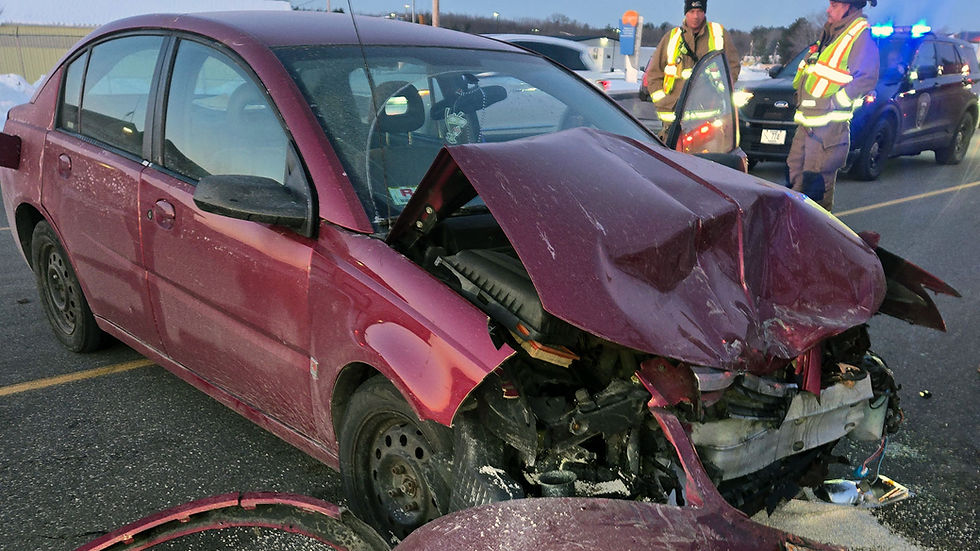
Diminished value is the third lever, and the one carriers hope you do not raise. Even after a quality repair, a vehicle with a documented accident on its CarFax sells for less than an identical vehicle without one. New Hampshire law recognizes property-damage compensation that makes the plaintiff whole, including the post-repair market gap. NH Civil Jury Instruction NS9.112 (Mitigation of Damages, Property Damage); see generally Clipper Affiliates, Inc. v. Checovich, 138 N.H. 271, 638 A.2d 791 (1994) (damages measured to make plaintiff whole, citing Restatement (Second) of Torts § 912).
What works: Getting an independent appraisal that documents both the repair cost and the post-repair diminished value, and presenting it to the at-fault carrier with a demand citing the diminution.
What does not work: Accepting the carrier's first total-loss valuation. Insurance carriers use proprietary valuation software (e.g., CCC and Mitchell) that systematically undervalues vehicles. Always pull three comparable listings from AutoTrader or Cars.com within a 75-mile radius and counter.
What Works, What Doesn't: The Insurance Stacking Playbook
This is where most New Hampshire injury claims succeed or fail. New Hampshire is not a true no-fault state. New Hampshire is a tort state with mandatory financial responsibility, which means you can sue the at-fault driver directly, but you also have to navigate several layers of first-party coverage on the way to the recovery. The order in which you tap each layer determines how much of the gross recovery you actually keep.
NH Financial Responsibility Law (RSA 264)
New Hampshire does not require liability insurance to register a vehicle. That sounds shocking, and it is. Roughly 1 in 10 NH drivers carry no liability insurance. The Financial Responsibility Law (RSA Chapter 264) requires drivers who have been in certain accidents or convicted of certain offenses to file proof of financial responsibility going forward, but it does not require all drivers to carry insurance up front. The practical consequence: if you do not carry uninsured-motorist coverage, and the driver who hits you has no insurance, you have no source of recovery for bodily injury damages other than the at-fault driver's personal assets. Most uninsured drivers have no meaningful personal assets.
The position I take: every NH driver should carry uninsured/underinsured motorist coverage at the highest limit they can afford and Med Pay at a minimum of $5,000. The cost is a few dollars a month. The difference in a serious injury case is six figures.
Med Pay: The Quiet Multiplier (RSA 264:15)
Medical payments coverage, or Med Pay, is a small first-party benefit (commonly $1,000 to $25,000) on your own auto policy that pays your medical bills regardless of fault. Under RSA 264:15, NH auto policies must offer at least $1,000 in Med Pay, and most carriers offer higher limits as an inexpensive add-on.
Med Pay is the quiet multiplier in a personal injury case for three reasons.
First, Med Pay is not subject to subrogation in the same way health insurance is. Most NH carriers do not subrogate Med Pay against the bodily injury recovery, which means the dollars stack rather than offset each other. If you have $10,000 in Med Pay and a $50,000 bodily injury settlement, you keep both, less attorney fees and any unsubrogated liens.
Second, Med Pay pays providers directly, keeping you out of collections while the liability claim is pending. That preserves your credit and your ability to keep treating without out-of-pocket cost.
Third, Med Pay is recoverable from the at-fault carrier as part of your medical specials even though your own carrier paid it. The collateral source rule, as applied in New Hampshire, allows you to recover the full reasonable value of your medical care from the tortfeasor, regardless of who actually paid the bill. See NH Civil Jury Instruction NS9.109 (Public Entities—Collateral Source Payment) for the public-entity carve-out; the broader common-law rule still favors the plaintiff in private-payor situations.
My position: if you have Med Pay, use it. Direct providers to bill Med Pay before health insurance whenever possible. The math almost always favors Med Pay first.
UM/UIM: When the Other Driver Has No Coverage
Uninsured Motorist (UM) coverage pays when the at-fault driver has no liability insurance. Underinsured Motorist (UIM) coverage pays when the at-fault driver has some liability insurance but not enough to cover your damages. Under New Hampshire law, UM/UIM coverage must be offered in writing on every NH auto policy and is at the same limits as your bodily injury liability coverage unless you specifically reject or reduce it in writing.
UM/UIM is your most important insurance asset in a serious-injury case because it is the only layer that pays when the at-fault driver is uninsured or grossly underinsured (which, in NH, includes the statutory minimum policyholder).
What does not work: Settling with the at-fault carrier without first putting your UIM carrier on written notice and obtaining consent. Settling without consent can result in forfeiture of the UIM claim. This is the single most common malpractice trap in NH UIM practice, and it is why injured people should not settle directly with an adjuster without consulting counsel.
Health Insurance, Medicaid, and Medicare: Subrogation Traps
Health insurance, Medicaid, and Medicare all pay your medical bills, but each one has a legal right to be repaid out of your injury settlement. This is called subrogation or reimbursement.
Private health insurance: Subrogation depends on the policy language and whether the plan is governed by ERISA. ERISA self-funded plans have broad federal-law reimbursement rights and are difficult to reduce. Fully insured plans governed by NH law may be reduced under the "common fund" doctrine, which requires the insurer to share the cost of recovery.
NH Medicaid: Medicaid has a statutory right of reimbursement under federal and state law, but the Ahlborn line of cases limits Medicaid's recovery to the portion of the settlement attributable to past medical expenses. A properly drafted allocation can dramatically reduce the Medicaid lien.
Medicare: Medicare has a federal statutory super-lien with significant teeth. The settlement is reported to CMS, and Medicare has formal procedures (and timing) for asserting and resolving the lien. Future medical expenses may require a Medicare Set-Aside in some catastrophic cases.
My position is that every NH injury case should undergo a lien audit before settlement. The difference between a properly reduced Medicare lien and a default lien can be 30% to 50% of the net recovery in a serious-injury case.
Where I Practice
Apis Law represents injured people throughout New Hampshire, with a primary office at 470 Mast Road, Goffstown, NH 03045, and a second office at 3 Executive Park Drive, Ste 201E, Bedford, NH 03110. I handle cases across the I-93 corridor: Bedford (Route 101 and the toll plaza), Manchester (I-293, Elm Street, Second Street), Goffstown (Mast Road / NH-114), Concord (I-93/I-89 interchange, Loudon Road), and Nashua (Everett Turnpike, Daniel Webster Highway). Cases out of these communities are typically venued in Hillsborough County Superior Court South (Manchester, Bedford, Goffstown, Nashua) or Merrimack County Superior Court (Concord).
If you were injured in any of these communities, the consultation is free, the fee is contingent (no recovery, no fee), and I do not take a case unless I believe I can add value beyond what the carrier would offer you directly.

Frequently Asked Questions
Can I recover medical bills that my health insurance already paid for in a New Hampshire injury case?
Yes. Under the collateral source rule as applied in New Hampshire, you can recover the reasonable value of medical care from the at-fault driver regardless of whether your health insurer, Medicare, Medicaid, or Med Pay paid the bill first. The collateral payment does not reduce what the tortfeasor owes. However, the collateral payor typically has a subrogation or reimbursement right against your recovery, so the net amount you keep depends on how that lien is negotiated. See NH Civil Jury Instruction NS9.109; Johnston v. Lynch, 133 N.H. 79 (1990).
How does New Hampshire's comparative fault rule affect my economic damages?
Under RSA 507:7-d, if you are 50% or less at fault for the crash, you recover your damages reduced by your percentage of fault. If you are 51% or more at fault, you recover nothing. So if a jury awards $100,000 in economic damages but finds you 20% at fault, you receive $80,000. Fault apportionment also applies to non-parties under RSA 507:7-e and Virgin v. Fireworks of Tilton, 172 N.H. 484 (2019), which means defense counsel will often try to shift fault to absent parties to reduce the verdict.
Do I have to prove my future lost wages with mathematical certainty?
No. New Hampshire law does not require mathematical certainty for damages, including future earning capacity. Boynton v. Figueroa, 154 N.H. 592 (2006); Porter v. City of Manchester, 151 N.H. 30 (2004). The plaintiff must present enough evidence to give the jury a reasonable basis to estimate the loss. A treating physician's documented permanent restriction, plus pre-injury earnings records and a vocational analysis, is typically sufficient.
Should I use my Med Pay coverage before my health insurance?
In most New Hampshire cases, yes. Med Pay coverage under RSA 264:15 typically does not subrogate against your bodily injury recovery the way health insurance does, which means Med Pay dollars stack with your settlement rather than reducing it. Direct providers to bill Med Pay first whenever the carrier permits. Run the math on each individual claim, because policy language varies.
What happens to my injury claim if the at-fault driver has no insurance?
If the at-fault driver has no liability insurance and you carry uninsured motorist coverage (UM) on your own NH auto policy, you make the claim against your own UM coverage at the limits you elected. If you do not carry UM, your only recourse is a direct claim against the at-fault driver's personal assets, which, in most cases, is not a meaningful source of recovery. This is why every NH driver should carry UM/UIM coverage at the highest limit they can afford.
External Legal Resources
NH RSA Chapter 264 (Motor Vehicle Insurance and Financial Responsibility): https://www.gencourt.state.nh.us/rsa/html/NHTOC/NHTOC-XXI-264.htm
NH RSA 507:7-d (Comparative Fault): https://www.gencourt.state.nh.us/rsa/html/LV/507/507-7-d.htm
New Hampshire Judicial Branch: https://www.courts.nh.gov/
New Hampshire Insurance Department: https://www.nh.gov/insurance/
CMS Medicare Secondary Payer overview: https://www.cms.gov/medicare/coordination-benefits-recovery
Related Reading on apislaw.com
About the Author
Keith F. Diaz, Esq., is the founder of Apis Law, PLLC, a New Hampshire personal injury and employment law firm. Since 2003, Attorney Diaz has been admitted to practice in the State of New Hampshire (Bar No. 15831), the U.S. District Court for the District of New Hampshire, and the First Circuit Court of Appeals. He founded Apis Law in 2022 to provide dedicated, client-focused representation to individuals and families throughout New Hampshire.
Call to Action
If you were injured in a New Hampshire crash and want to know what your case is actually worth before you talk to an adjuster, call Apis Law at (603) 785-1013 or use the contact form on apislaw.com. The consultation is free. The fee is contingent. I take a limited number of injury cases at a time so each one gets the attention it requires.
Past Results Disclaimer
Past results do not guarantee future outcomes. Every case is different. Nothing in this article should be construed as legal advice for any specific situation. Reading this article does not create an attorney-client relationship with Apis Law, PLLC or Keith F. Diaz, Esq.


Comments